-
1. Understanding The Crisis in Behavioral Health Clinics
7 Lessons -
2. Maximizing Counselor Time
9 Lessons-
StartModule 2 Learning Objectives
-
Start2.a A Path To Reducing Burnout and Improving Patient Care
-
Start2.b The Importance of Counselors Seeing Patients
-
Start2.c The Impact of Non-Clinical Work on Burnout
-
Start2.d Strategy 1 - Offload Non-Clinical Work
-
Start2.e Strategy 2 - Automating Tasks for Counselors
-
Start2.f Strategy 3 - Ensuring Information Availability
-
Start2.g Conclusion
-
StartModule 2 Quiz
-
-
3. Reducing the Impact of Missed Appointments
9 Lessons-
StartModule 3 Learning Objectives
-
Start3.a Introduction
-
Start3.b Exploring the Impact
-
Start3.c Navigating the Challenges
-
Start3.d Strategy 1 - Reduce No-Shows and Late Cancellations
-
Start3.e Strategy 2 - Using Rapid Availability Lists
-
Start3.f Strategy 3 - Understanding and Addressing Patient Barriers
-
Start3.g Conclusion
-
StartModule 3 Quiz
-
-
4. Improving Financial Decision Making
8 Lessons-
StartModule 4 Learning Objectives
-
Start4.a Introduction to Financial Decision-Making
-
Start4.b Why Throughput Accounting Matters
-
Start4.c Basics of Throughput Accounting
-
Start4.d Key Terms in Throughput Accounting
-
Start4.e Applying Throughput Accounting in Real-World Scenarios
-
Start4.f Conclusion
-
StartModule 4 Quiz
-
-
6. Learning Strategies to Reduce Burnout
9 Lessons-
StartModule 6 Learning Objectives
-
Start6.a. Understanding Burnout and Its Core Components
-
Start6.b. Identifying the Multifaceted Causes of Burnout, Especially Organizational Factors
-
Start6.c. Recognizing the Signs and Profound Impact of Burnout
-
Start6.d. Prioritizing Individual Self-Care and Resilience Strategies
-
Start6.e. Implementing Effective Organizational Strategies as the Primary Solution
-
Start6.f. The Importance of Continuous Assessment, Evaluation, and Sustained Effort
-
StartReferences
-
StartModule 6 Quiz
-
Course Features

Learn to reduce bottlenecks to care

Access tools to improve patient flow

Watch and learn at your own pace

Go deeper in our peer community

Cost
Free

Access Includes
Course & Community

Time to Complete
< 2.5 HOURS

Improve Clinic Efficiency
Led by Dr. Danilo Sirias and made possible by a grant from the Michigan Health Endowment Fund, this free course and training community helps behavioral health clinic leaders reduce barriers to care, prevent staff burnout, and streamline operations. Graduates join a network of clinic leaders committed to quarterly challenges that drive measurable, real-world improvements.
What You Will Learn and Achieve
Designed for busy behavioral health professionals, this self-paced course delivers 2.5 hours of targeted training to help streamline clinic operations—plus ongoing access to a peer community and quarterly success challenges.

Increased Patient Access
Learn how to streamline the intake process to reduce wait times and no-shows.

Improved Clinic Flow
Identify and eliminate bottlenecks to create a smoother, more efficient daily operation.

Reduced Staff Burnout
Implement changes that ease clinician workloads, boost staff satisfaction, and improve care.

Connected Peer Support
Share ideas, get feedback, and gain support from professionals with the same goals.
Join the Breaking Barriers Community
Change is easier when you're supported. Our community connects you with leaders in behavioral health who are facing the same challenges and striving for better care.

Quarterly community challenges
Participate in challenges designed to boost growth and improvement.
Ongoing Peer Support
Funding opportunities to overhaul your practice using the Theory of Constraints.
Fully Funded Clinic Overhauls
Potentially qualify for funding to implement the course strategies into your clinic.

Course Outline
Click the dropdown arrows below to explore course content.
Register today or sign up for informational emails to learn more
Real-World Impact

“Our agency’s involvement in the SVSU-led grant, under the direction of Dr. Danilo Sirias, provided us with the guidance, strategies, and support to strengthen our operations. Through this collaboration, we were able to improve efficiency, increase meaningful patient-provider time, and enhance the quality of services we deliver to our community.”
Jill E. Hogenson, President/CEO Child and Family Services of Saginaw
Trusted by Industry Leaders

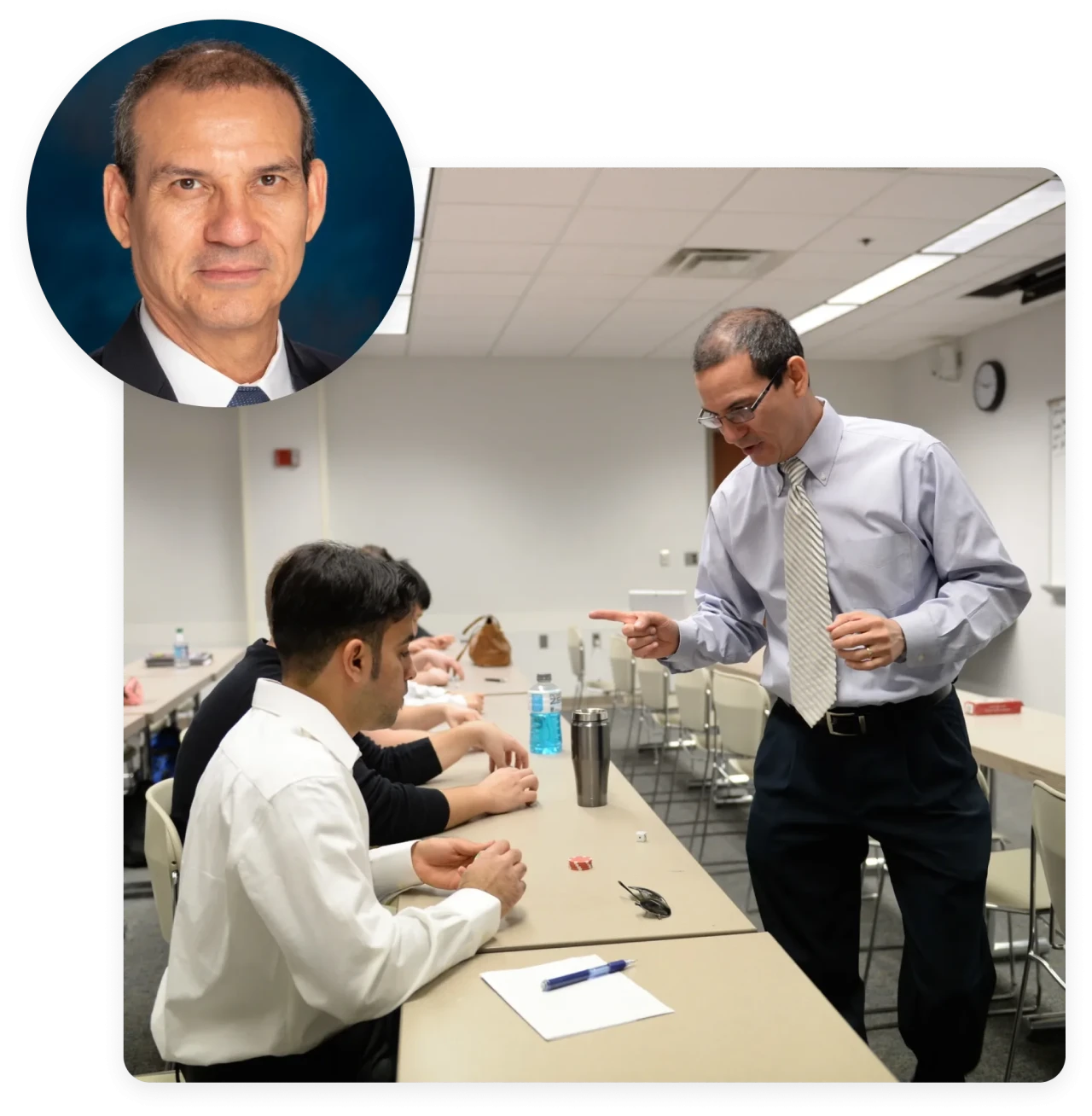
Meet The Instructor
DR. Danilo Sirias
Dr. Sirias holds a Ph.D. in Business Administration and a master’s degree in Industrial and Systems Engineering. He is a certified expert in multiple Theory of Constraints (TOC) methodologies.
As a professor at Saginaw Valley State University, his research centers on applying TOC to improve patient flow in healthcare environments. He is the co-author of Smash the Bottleneck and the creator of the internationally used Problem Solving Maps (PSM) method. Dr. Sirias has been recognized with numerous honors, including the 2019 TOCICO Practitioner of the Year and a 2024 Lifetime Achievement Award.
Frequently Asked Questions
Get answers to common questions about this course.
Who is this course designed for?
This course was specifically designed for leaders and staff at behavioral health clinics. The content covers how to improve operational efficiency for those facing long waitlists, staff burnout, or clinic flow challenges.
How do I access the course and community?
You can click here to register for the course. After the release date, you’ll have indefinite access to both the course materials and the private community. The course is designed to be completed at your own pace, allowing you to fit it into your schedule whenever it’s most convenient. Importantly, the course lays the strategic foundation—but the real transformation happens in the community. Through quarterly implementation challenges led by Dr. Sirias, you'll have the opportunity to apply what you’ve learned alongside other clinic leaders. This collaborative space fosters peer support, accountability, and shared problem-solving to help you turn insights into action.
How much does the course cost?
This course is free! Thanks to the generous support of the Michigan Health Endowment Fund, we are able to provide this high-value training and peer community at no cost.
Can I take this course with my team?
Absolutely, and we highly recommend it. Implementing new strategies is far more effective when your whole team is on the same page. Taking the course together helps create shared understanding, encourages accountability, and makes it easier to integrate changes into your clinic’s day-to-day operations. Plus, when your team learns together, you build momentum faster and see results sooner.
When does the course start and how do I register?
The course is self-directed, but access to the course opens up on October 8, 2025. Please register for the course here: register now.
Ready to begin?
Register today or sign up to learn more about the course.